Climate Inequality
Image Source: Q&A: Scientists Analyze How the Pandemic Affected Air Quality (https://www.nasa.gov/centers-and-facilities/goddard/qa-scientists-analyze-how-the-pandemic-affected-air-quality/)
Understanding NO2 and Its Impact on Health
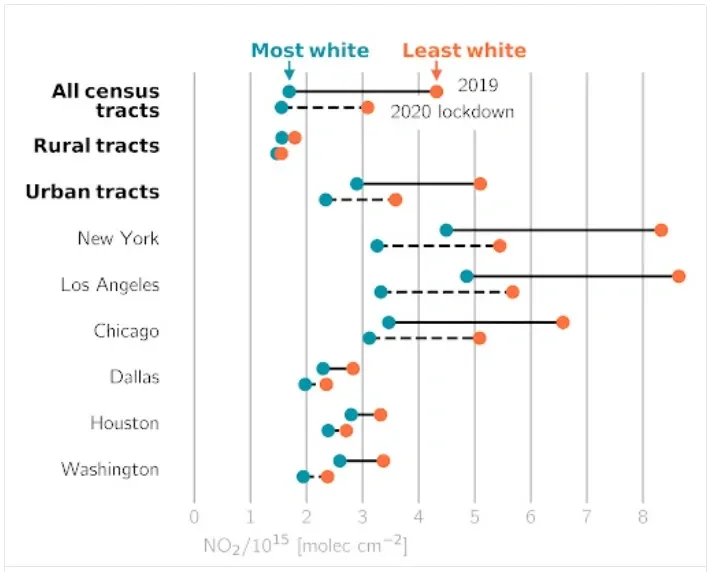
Nitrogen dioxide (NO2) is a harmful air pollutant regulated due to its adverse effects on human health, including triggering respiratory illnesses like asthma. The primary sources of NO2 in urban areas are traffic emissions, power plants, incinerators, and factories. During the pandemic, the decrease in vehicle traffic and industrial activity led to a significant drop in NO2 levels. However, the distribution of these improvements was uneven, reflecting deeper environmental justice issues.
Unequal Air Pollution
This study highlights a general decrease in NO2 levels across the 15 largest metropolitan areas in the US. However, the extent of this decrease varied by location and was influenced by race, ethnicity, and socioeconomic status. Areas with a larger non-white population saw the largest reductions in NO2, yet these levels remained higher than the pre-pandemic levels in predominantly white neighborhoods. This discrepancy points to a longstanding issue of environmental inequality, where communities of color and lower socioeconomic status are more likely to be exposed to pollution and its harmful effects.
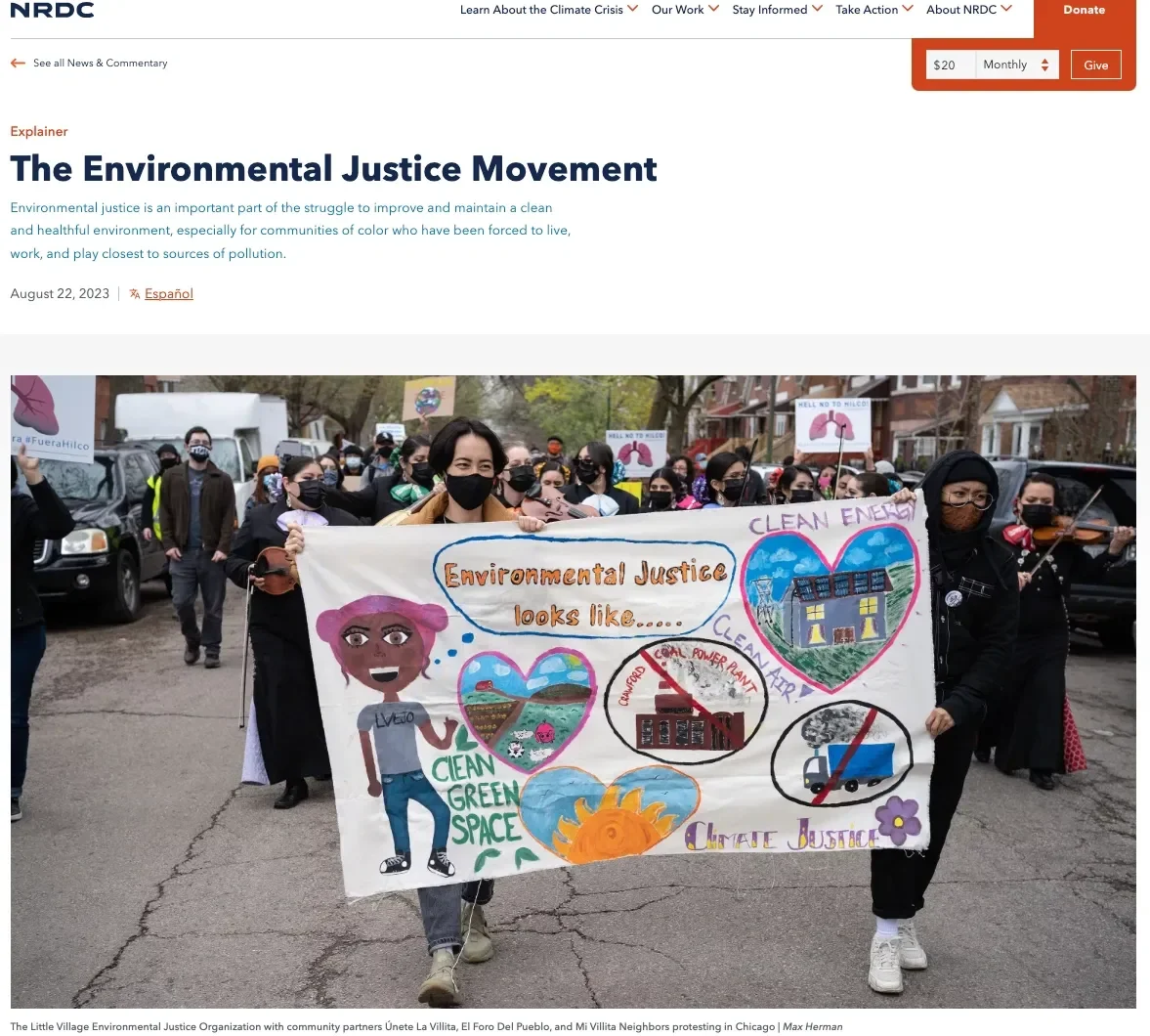
Climate inequality reflects the disproportionate impact of climate change and environmental degradation on marginalized communities worldwide. Despite contributing the least to global emissions, vulnerable populations—such as those in developing countries, indigenous communities, and low-income neighborhoods in urban areas—face the most severe consequences. These include increased exposure to extreme weather events, poor air and water quality, and diminished access to resources and economic opportunities. The disparity is further exacerbated by factors like race, ethnicity, and socioeconomic status, leading to significant health, social, and economic inequities. Addressing climate inequality requires global cooperation and policies prioritizing environmental justice, ensuring climate action benefits all communities equitably, and supports the most affected by providing adaptive resources and sustainable development opportunities.
Structural Inequality and Environmental Justice
The findings suggest that the physical infrastructure of cities plays a significant role in these disparities. Neighborhoods with a larger non-white population tend to be closer to highways and industrial areas, leading to higher exposure to NO2. Despite the overall reduction in NO2 levels during the pandemic, the pre-existing environmental injustices remained unaddressed, highlighting a persistent inequality in exposure to harmful pollutants.
Policy Implications and Future Directions
This situation underscores the need for targeted environmental policies that address the root causes of inequality in air pollution exposure. Strategies to improve air quality must consider pollution sources' spatial distribution and proximity to vulnerable communities. Environmental justice must be a central component of climate policies, ensuring that efforts to reduce pollution benefit all communities equally.
Moreover, the pandemic provided a unique opportunity to observe the impact of reduced human activity on air quality. This unintended experiment illustrates the potential benefits of sustainable urban planning and transportation policies that could lead to long-term improvements in air quality and public health, especially for the most vulnerable populations.
Addressing climate inequality requires a multifaceted approach that combines environmental science, public health, and social justice. We can work towards a more equitable and sustainable future for all communities by acknowledging and addressing the disparities in pollution exposure and health outcomes.
For more information click on the linked images below: